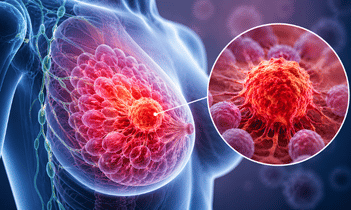
A breast cancer diagnosis usually arrives with a mammogram, an ultrasound and a biopsy report already in hand, and a recommendation for surgery that can feel rushed before all the options have actually been explained.
Fill out the form and our team will contact you shortly.
A breast cancer diagnosis usually arrives with a mammogram, an ultrasound, and a biopsy report already in hand, and a recommendation for surgery that can feel rushed before all the options have actually been explained. The two biggest questions patients in Dubai want answered clearly are whether breast-conserving surgery is realistic instead of a full mastectomy, and what the hormone receptor and HER2 results in the pathology report actually mean for the treatment plan that follows.
Dr. Ajeet Tiwari is an MCh surgical oncologist who reviews breast cancer cases for patients in Dubai, explains what the imaging and receptor status findings mean in practical terms, and sets out a comprehensive surgical and systemic treatment plan once the full picture is confirmed.
This page walks through both surgical options and systemic therapies, explaining how personalized oncological plans are structured.
Most patients arrive at this stage with a diagnostic mammogram, an ultrasound, and a core needle biopsy already completed, often with estrogen/progesterone receptor and HER2 status included in the immunohistochemistry report. These same reports provide the foundation for a thorough second opinion. An independent evaluation by an experienced surgical oncologist frequently clarifies options, especially regarding how much surgery is genuinely necessary.
Depending on tumor size, location within the breast tissue, and clinical stage, surgery involves either breast-conserving surgery (lumpectomy)—removing the tumor with a clear margin of healthy tissue while preserving the breast—or a mastectomy, removing the entire breast gland. Both deliver equivalent long-term oncological survival; the selection hinges on achieving negative margins alongside optimal cosmetic and functional outcomes.
| Factor | Breast-Conserving Surgery | Mastectomy |
|---|---|---|
| What's removed | Tumor plus a clear margin of surrounding healthy breast tissue | The entire breast tissue, including the nipple-areolar complex in standard procedures |
| Usually followed by | Adjuvant radiotherapy to the remaining breast tissue to minimize local recurrence | Radiotherapy only if specific high-risk features (such as positive nodes or large tumors) are present |
| Best suited for | Smaller tumors relative to breast volume, unifocal disease, and favorable tumor biology | Larger tumors, multicentric disease, extensive calcifications, or patient preference |
| Typical hospital stay | Often day-case surgery or an overnight observation stay | Around 2–3 days with surgical drain management |
The pathology report's receptor status is central to treatment design. It dictates precisely which targeted agents, endocrine therapies, or chemotherapy regimens will effectively eradicate cancer cells.
| Receptor Result | What It Means for Treatment |
|---|---|
| Hormone receptor positive (ER/PR positive) | Endocrine (hormone) therapy forms an integral part of treatment, typically taken orally for 5 to 10 years after surgery to block estrogen stimulation |
| HER2 positive | Targeted monoclonal antibody therapies (such as Trastuzumab/Pertuzumab) directed specifically against the HER2 protein are added to systemic treatment |
| Triple-negative (ER, PR, and HER2 negative) | Chemotherapy combined with immunotherapy is the primary systemic treatment, as hormone and HER2-targeted agents are not effective |
Assessing whether cancer cells have traversed to the regional axillary lymph nodes is a crucial component of modern breast cancer surgery.
This targeted technique isolates and removes only the first few draining lymph nodes using specialized radioisotope or blue dye tracers. If these sentinel nodes are negative on frozen section or histopathology, full axillary clearance is avoided, drastically reducing the lifetime risk of upper-limb lymphedema.
When biopsy results or sentinel nodes confirm heavier nodal involvement, a formal axillary lymph node dissection is performed to achieve complete regional disease clearance and guide systemic dosing.
When a mastectomy is clinically necessary, breast reconstruction—performed either immediately during the primary cancer surgery or delayed after completing adjuvant therapies—is thoroughly evaluated. Suitability depends on tumor staging, skin elasticity, radiation requirements, and personal aesthetic goals.
The decision to administer systemic therapies before or after surgery is governed by tumor size, nodal status, and biological subtype determined by immunohistochemistry.
For locally advanced tumors, triple-negative, or HER2-positive breast cancers, neoadjuvant chemotherapy is frequently administered upfront. This shrinks the tumor, facilitates breast conservation instead of mastectomy, and reveals biological tumor responsiveness in real time.
For many early-stage, strongly hormone receptor-positive tumors, surgery is performed first. Final histopathology and molecular genomic profiling (such as Oncotype DX) then determine whether post-operative chemotherapy or hormone therapy alone is needed.
Overall expenses depend on the surgical procedure required (breast conservation vs. mastectomy), whether immediate oncoplastic reconstruction is performed, and the specific systemic regimen (chemotherapy, targeted biologics, or radiation). A formal, itemized cost estimate is provided after reviewing your pathology and imaging findings.
The remote surgical consultation process is fully available to patients researching breast oncological management from Riyadh, Jeddah, and Kuwait. Mammograms, breast MRIs, core biopsy reports, and receptor immunohistochemistry profiles can be uploaded securely for review prior to a scheduled video consultation.
Send your mammogram reports, breast ultrasound/MRI scans, biopsy histology, and ER/PR/HER2 test results through our second opinion portal. You will receive an oncologist evaluation followed by a video discussion with Dr. Ajeet Tiwari to confirm surgical eligibility and systemic treatment pathways.
If you have received a biopsy report or imaging scan and need definitive guidance on breast-conserving surgery, mastectomy, or systemic therapy sequence, submit your records before finalizing treatment decisions.
Request Case ReviewFind answers to common questions about breast cancer surgery, breast-conserving lumpectomy, mastectomy, HER2 testing, reconstruction, and regional second opinions.