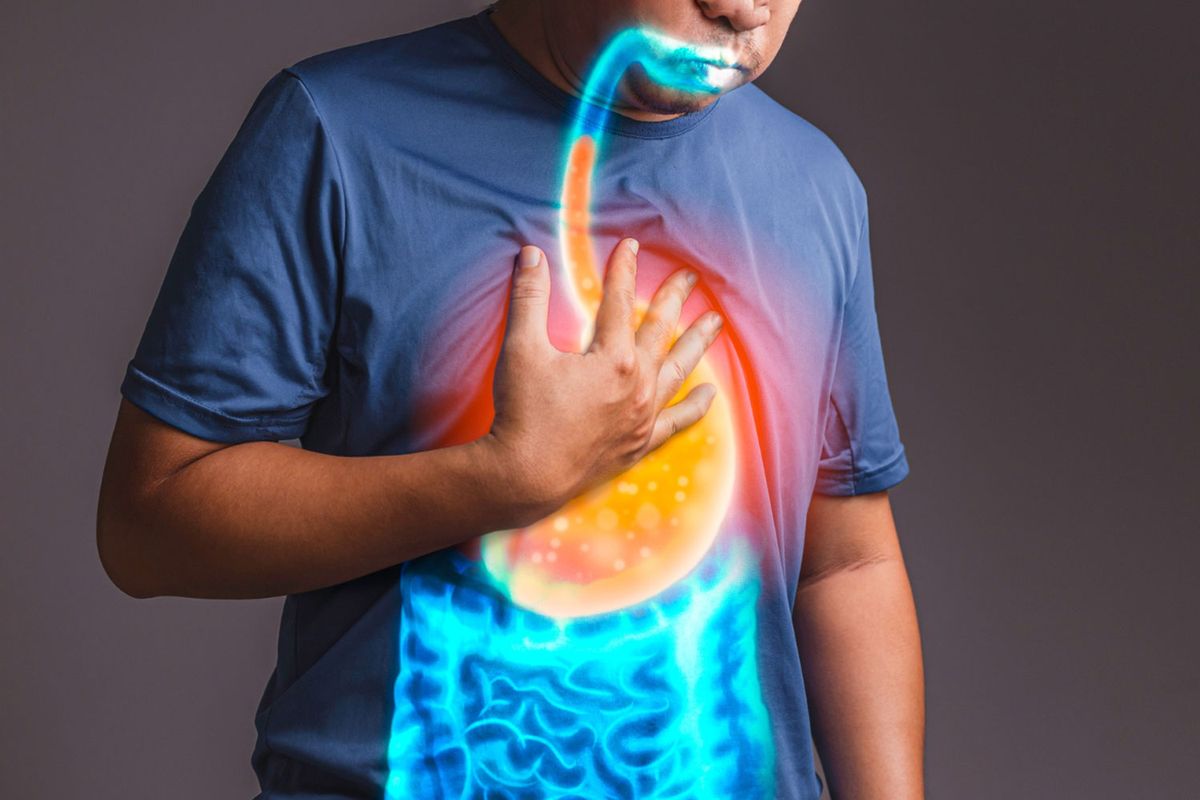
Difficulty swallowing that starts with solid food and gradually gets worse is a common symptom that leads to an esophageal cancer diagnosis, often after the disease has progressed enough to become noticeable.
Fill out the form and our team will contact you shortly.
Difficulty swallowing that starts with solid food and gradually gets worse is one of the most common symptoms that leads to an esophageal cancer diagnosis, often after the disease has progressed enough to become noticeable. Patients in Dubai typically want two questions clarified quickly: what type of esophageal cancer they have, since the two main types behave differently, and what surgery could mean for eating and swallowing after treatment.
Dr. Ajeet Tiwari is an MCh Surgical Oncologist who reviews esophageal cancer cases for patients in Dubai, explains the cancer staging and treatment sequence clearly, and develops a surgical plan that provides an honest understanding of what recovery may involve. This page covers both the surgical aspects of esophageal cancer treatment and the practical, everyday questions patients commonly ask.
The Two Main Types of Esophageal Cancer
Squamous cell carcinoma, linked mainly to smoking and alcohol use, tends to occur in the upper and middle esophagus. Adenocarcinoma, the more common type in many parts of the world, is strongly associated with long-standing acid reflux and a condition called Barrett's esophagus. It typically develops in the lower esophagus, closer to the stomach. Knowing which type of cancer is present helps shape the staging workup and, in some cases, determines the appropriate treatment sequence.
Patients looking for an esophageal cancer specialist in Dubai, an esophagus cancer surgeon in Dubai, or expert guidance regarding esophageal cancer surgery can consult Dr. Ajeet Tiwari for individualized treatment planning, surgical evaluation, and guidance on recovery and swallowing outcomes.
Diagnosis starts with an upper endoscopy and biopsy, followed by an endoscopic ultrasound to assess how deep the tumor has grown into the esophageal wall, and a PET-CT scan to check for spread to lymph nodes or distant sites. This combination determines whether surgery alone is appropriate or whether chemotherapy and radiotherapy should come first.
For most esophageal cancers beyond the earliest stage, a combined course of chemotherapy and radiotherapy is given before surgery, which shrinks the tumor, treats microscopic disease that scans cannot see, and improves the outcome of the operation that follows.
| Stage at Diagnosis | Typical Treatment Sequence |
|---|---|
| Very early, superficial tumor | Surgery alone, sometimes via endoscopic removal for the earliest cases |
| Locally advanced | Chemotherapy and radiotherapy first, followed by surgery a few weeks later |
| Extensive spread at diagnosis | Chemotherapy focused, with surgery reassessed based on response |
Esophagectomy involves removing the affected portion of the esophagus along with nearby lymph nodes. The remaining esophagus is then reconnected, most often by using part of the stomach, which is pulled up into the chest to restore a continuous passage for food. Depending on the patient's condition and suitability, the surgery may be performed through open surgery or a minimally invasive approach using smaller incisions in the chest and abdomen.
The cancer-affected portion of the esophagus is carefully removed during the procedure.
Nearby lymph nodes may also be removed to assess and control the spread of esophageal cancer.
The remaining esophagus is reconnected to restore a continuous pathway for food.
Part of the stomach is commonly brought up into the chest and connected to the remaining esophagus.
In selected cases, the surgery is performed through larger incisions in the chest and abdomen.
Suitable patients may undergo surgery through smaller incisions in the chest and abdomen.
| Aspect | Open Esophagectomy | Minimally Invasive Esophagectomy |
|---|---|---|
| Incision Approach | Larger incisions in the chest and abdomen | Several small incisions using a camera-guided approach |
| Typical Hospital Stay | Around 10–14 days | Around 8–12 days for suitable cases |
| Recovery | Longer initial recovery with more post-operative discomfort | Generally faster early mobility |
| Best Suited For | Larger or more complex tumors | Earlier-stage, well-localised tumors |
Recovery after esophagectomy involves a gradual return to eating, beginning with liquids and progressing to soft and regular foods over several weeks. Smaller, more frequent meals often become part of the long-term routine. In some cases, a temporary feeding tube may be used during the early recovery period to support nutrition while the reconstructed esophagus heals.
Eating usually begins with liquids as the reconstructed esophagus starts to heal and adapt after surgery.
As swallowing improves, patients gradually progress from liquids to soft and easily digestible foods.
Regular foods can be reintroduced gradually over several weeks as healing and swallowing improve.
Eating smaller meals more frequently may become a long-term part of the routine after esophagectomy.
A temporary feeding tube may be used to provide nutritional support while the reconstructed esophagus heals.
Feeding support is planned and explained before surgery as part of the expected recovery process.
The cost of esophageal cancer treatment depends on several factors, including whether chemoradiotherapy is required before surgery, the surgical approach used, and the length of hospital stay. A written cost estimate is provided once the staging evaluation is complete.
The same comprehensive review process is available for patients seeking esophageal cancer treatment from Riyadh, Jeddah and Kuwait. Endoscopy, biopsy, and staging results completed locally can be shared for review, followed by a video consultation to discuss the diagnosis and recommended treatment sequence.
Send your endoscopy report, biopsy results, and staging scans through the online second opinion page. Your case will undergo a clinical review, followed by a video consultation to discuss whether chemoradiotherapy is needed before surgery and what you can expect during recovery.
Find answers to common questions about esophageal cancer, treatment, esophagectomy, recovery, and international patient care.