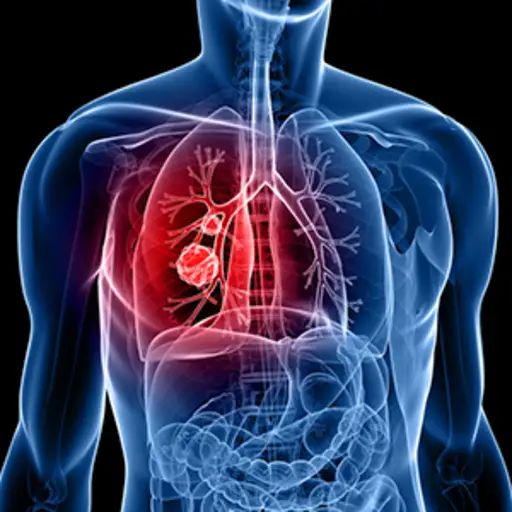
A lung cancer finding, whether picked up on a routine scan or investigated after weeks of a cough that would not settle, immediately raises a question most patients in Dubai are not prepared for:
Fill out the form and our team will contact you shortly.
A lung cancer finding, whether picked up on a routine scan or investigated after weeks of a cough that would not settle, immediately raises a question most patients in Dubai are not prepared for: is this operable, or is it a case for targeted drug therapy instead? That answer depends on staging and, increasingly, on the specific genetic profile of the tumor, not on the diagnosis alone. Getting that answer right the first time shapes everything that follows.
Dr. Ajeet Tiwari is an MCh surgical oncologist who reviews lung cancer cases for patients in Dubai, interprets the biopsy, staging and molecular test results in plain terms, and sets out a surgical or combined treatment plan once the full picture is clear. This page explains how that picture comes together.
A lung nodule or mass is usually sampled through a bronchoscopy if centrally located, or a CT-guided needle biopsy if it sits closer to the lung's outer surface, followed by a PET-CT scan to check whether the cancer has spread to lymph nodes or elsewhere in the body. This combination is what actually determines whether surgery, targeted therapy, or a combined approach makes sense for your case.
The vast majority of lung cancers fall into the non-small cell category, which behaves differently and is treated differently from the less common small cell type. This distinction, confirmed on biopsy, is one of the first things that shapes the entire treatment pathway.
For non-small cell lung cancer specifically, testing the tumor tissue for mutations such as EGFR, ALK rearrangements, ROS1, and PD-L1 expression has become a routine part of the workup, because these results can open up targeted drug therapies that work very differently, and sometimes more effectively with fewer side effects, than standard chemotherapy.
| Biomarker | What a Positive Result Can Mean |
|---|---|
| EGFR mutation | May make the tumor responsive to specific oral targeted therapy drugs |
| ALK rearrangement | Associated with a distinct group of targeted therapies, often used before or instead of chemotherapy |
| ROS1 rearrangement | Linked to a smaller group of patients who respond well to specific targeted drugs |
| PD-L1 expression | Helps predict how likely the tumor is to respond to immunotherapy, alone or combined with chemotherapy |
When surgery is the right option, most commonly for earlier-stage disease, the affected part of the lung is removed along with nearby lymph nodes for staging. This can usually be done through VATS, a minimally invasive keyhole technique using a camera and small instruments, or through a traditional open thoracotomy when the tumor's size or location requires it.
| Aspect | VATS (Keyhole Surgery) | Open Thoracotomy |
|---|---|---|
| Incision | Several small incisions between the ribs | One larger incision along the chest wall |
| Typical hospital stay | Around 4–6 days | Around 6–9 days |
| Pain and recovery | Generally less post-operative pain, faster mobility | More post-operative discomfort, longer recovery |
| Best suited for | Earlier-stage, well-localised tumors | Larger tumors or those close to major structures |
Cost depends heavily on whether surgery, targeted therapy, chemotherapy, or a combination is recommended, since targeted drugs in particular vary widely in price depending on the specific molecule used. A written cost estimate is provided once biopsy, staging and molecular testing are complete, so you have a specific figure rather than a general range to work from.
Whether additional treatment is needed after surgery depends on the final staging and lymph node involvement found during the operation.
Node-positive disease, or tumors with certain higher-risk features, usually call for a course of chemotherapy or, where a relevant mutation was identified, a targeted therapy drug after surgery to reduce the risk of recurrence.
Early-stage tumors removed with clear margins and no lymph node involvement are sometimes managed with surgery followed by a structured surveillance schedule of periodic scans, without additional drug treatment.
The same review process applies to patients researching lung cancer treatment from Riyadh, Jeddah and Kuwait. Bronchoscopy or biopsy results, staging scans and any molecular testing already completed can be sent for review, followed by a video consultation to discuss the surgical or drug treatment plan.
Send your biopsy report, staging scans and any molecular testing results through the online second opinion page. You will receive a clinical review followed by a video call to discuss whether surgery, targeted therapy, or a combined approach fits your specific case.
Find answers to common questions about lung cancer treatment, molecular testing, VATS surgery, costs, and cross-border care.